
Our Past and Present in Our Dreams: An Immigrant Therapist’s Reflection on Dreamers at the Precipice
Our Past and Present in Our Dreams
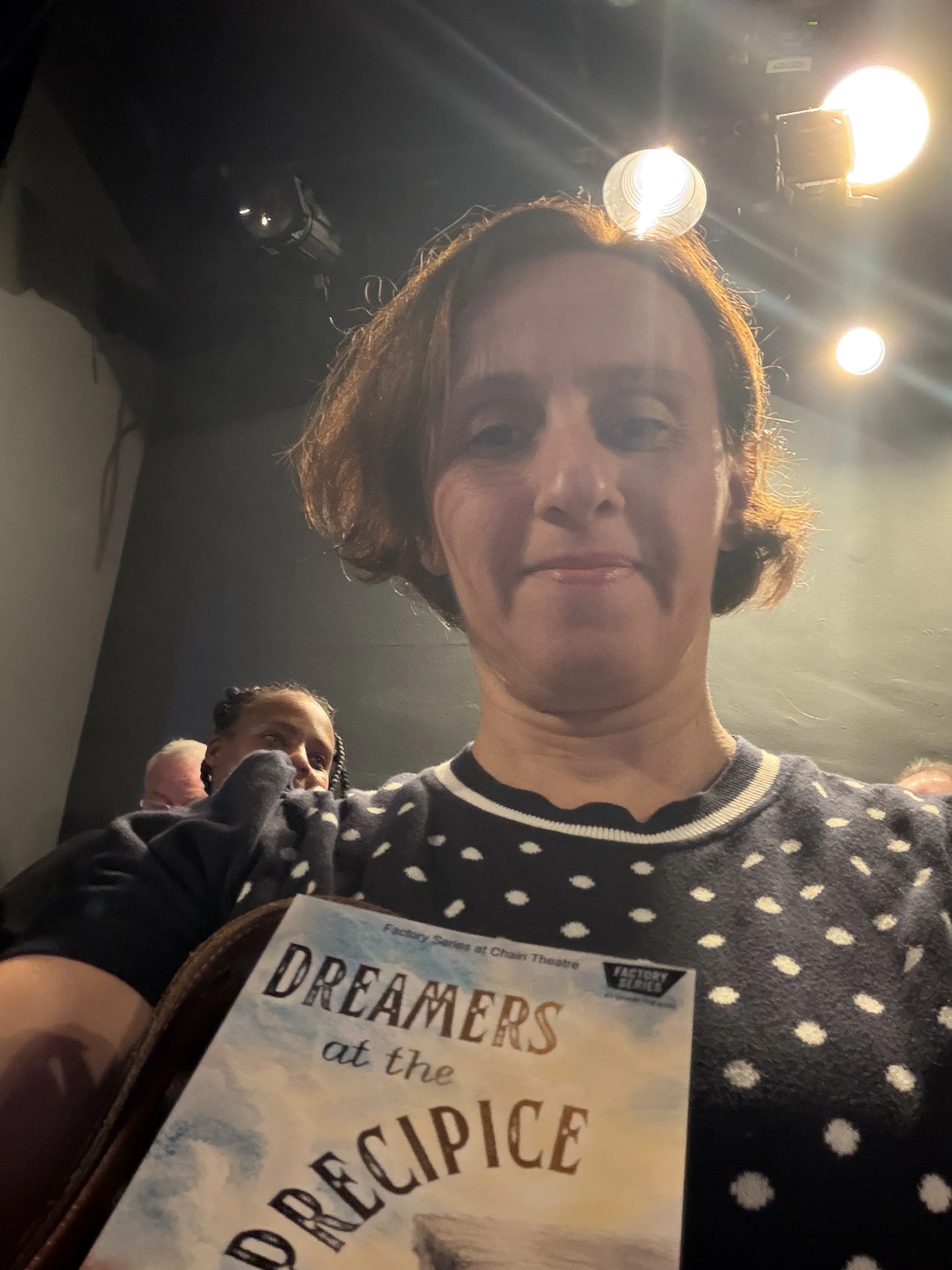
Yesterday, I saw Dreamers at the Precipice at the cozy, intimate Chain Theatre in NYC.
The play was written by Irene Javors and Kimberly Vassalo and directed by Kimberly Vassalo. I have known Kimberly since my early 20s, when we worked together at a nonprofit substance abuse clinic in the East Village. It was such an honor to be invited to see her play. I was sitting in the first row, so close to the actors that I almost felt like I was going through the experiences with each character. The actors did an amazing job of making the audience feel part of the story.
The play is inspired by Charlotte Beradt, a German-Jewish journalist who collected dreams from people living under Nazi rule between 1933 and 1939. The play connects those dreams with what is happening in America today, including political polarization, ICE, immigration, and fear of persecution.
As an immigrant myself, I noticed feelings of sadness and fear coming up while watching the play, especially around the themes of persecution, dictatorship, ICE, and political polarization surrounding immigration. Although I have lived in the United States for many years, these themes still touch something very personal in me.
While watching, I started thinking about my own dreams about World War II and the Holocaust. I never lived through those events, yet they are part of my family and cultural history. I also remembered 2020, when I was closely following the protests in Belarus. During that time, I started having nightmares about being persecuted. I was living safely in New York, but what was happening in Belarus was showing up in my dreams.
It made me think about intergenerational trauma. How much of our family history do we carry without even realizing it?
I also thought about dream work in Gestalt therapy. We talk so much about the here and now, but what about our past? How does it show up in the present, in our bodies, feelings, and dreams?
Another thing that stayed with me was how the play raises awareness about the suffering of others. I started thinking about our indifference and neutrality. Why do we sometimes choose not to see what is happening to other people? Is it because we don't care, or because caring can be too painful? Is neutrality sometimes a way to protect ourselves?
The play also made me think about history. Have we really learned from the past, or are we at risk of repeating it? We often think that something like this could never happen again, but history reminds us that it can. What does it take for us to recognize the warning signs before it is too late? I left the theater with more questions than answers.
Perhaps that is what I appreciated most about the play. It made me think about my own experiences, my history, and how we relate to the suffering of others. Thank you, Kimberly, Irene, and the wonderful cast for such a meaningful evening!